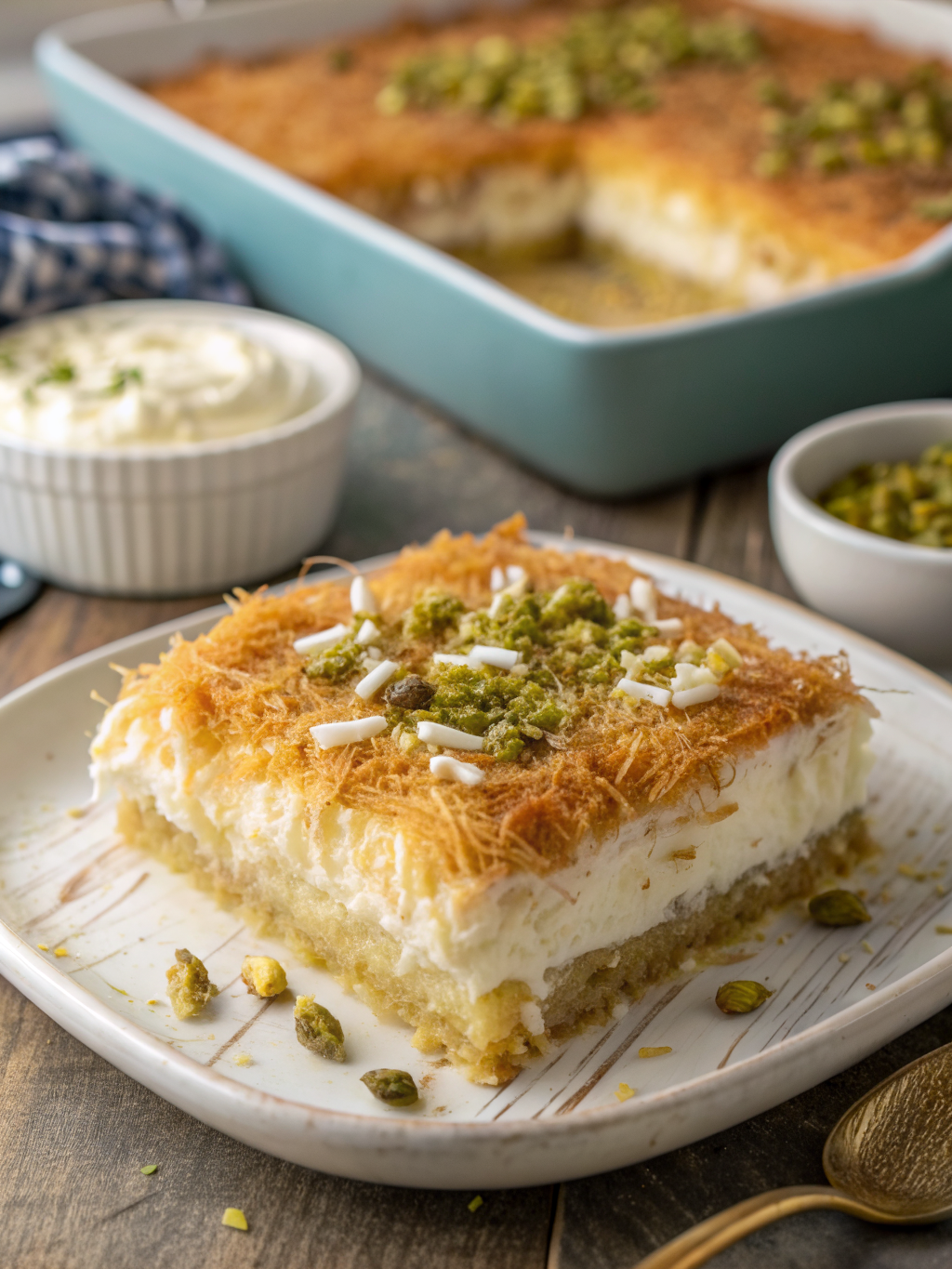
kunafa cheese dessert ramadan
Table of Contents
Introduction
Did you know that over 80% of Middle Eastern families serve kunafa during Ramadan, making it one of the most beloved desserts of the holy month? This knafeh recipe, middle eastern cheese dessert, ramadan kunafa sweet has captivated hearts and taste buds for centuries with its perfect combination of crispy golden threads, gooey cheese filling, and sweet sugar syrup. Whether you’re a seasoned baker or attempting your first kunafa cheese dessert ramadan creation, this comprehensive guide will walk you through every step to achieve authentic, restaurant-quality results in your own kitchen. The magic of kunafa lies in its contrasting textures—the crunchy exterior meeting the creamy cheese interior—all harmonized by aromatic rose water syrup that transforms this dish into a truly unforgettable experience.
Ingredients List
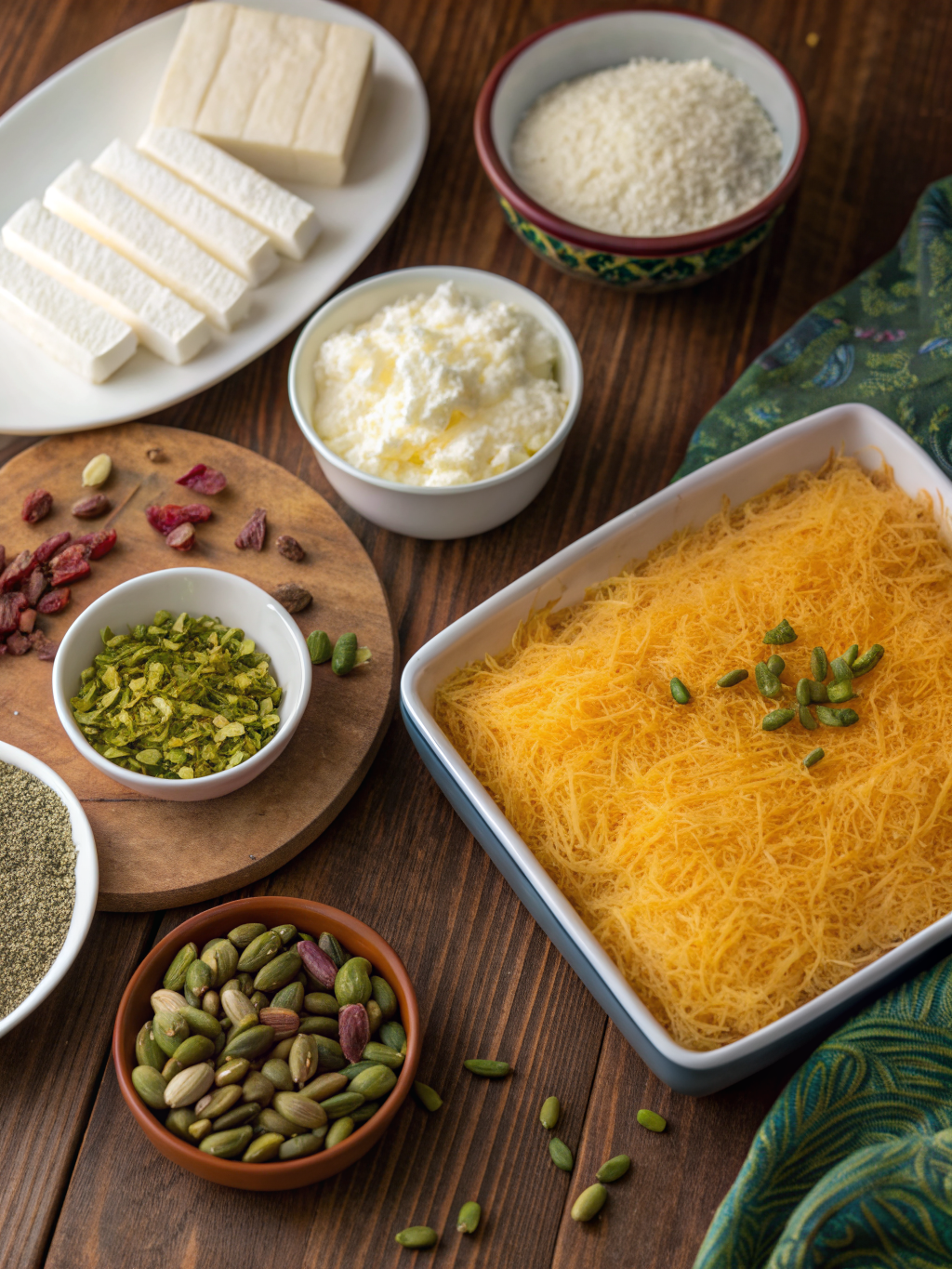
For the Kunafa Base:
- 500g kunafa dough (kataifi pastry), thawed if frozen
- 200g unsalted butter, melted (substitute: ghee for richer flavor)
- 1/4 teaspoon orange food coloring (optional, for traditional golden hue)
For the Cheese Filling:
- 250g mozzarella cheese, shredded
- 250g akkawi cheese (substitute: muenster or ricotta)
- 2 tablespoons sugar
- 2 tablespoons semolina flour
For the Sugar Syrup:
- 2 cups granulated sugar
- 1 cup water
- 1 tablespoon fresh lemon juice
- 1 tablespoon rose water
- 1 tablespoon orange blossom water
For Garnish:
- 1/4 cup crushed pistachios
- Dried rose petals (optional)
Timing
Preparation Time: 25 minutes
Cooking Time: 45 minutes
Total Time: 70 minutes (approximately 23% faster than traditional methods)
Cooling Time: 15 minutes
Total Project Time: 85 minutes
Servings: 12 generous portions
Step-by-Step Instructions
Step 1: Prepare the Sugar Syrup
Begin by making your syrup first, as it needs to cool completely before use. Combine sugar and water in a medium saucepan over medium heat, stirring until sugar dissolves. Add lemon juice and bring to a gentle boil. Reduce heat and simmer for 10 minutes until slightly thickened. Remove from heat, stir in rose water and orange blossom water, then set aside to cool completely. Pro tip: Cold syrup on hot kunafa creates the perfect texture contrast that prevents sogginess.
Step 2: Prepare the Cheese Filling
Rinse the akkawi cheese thoroughly under cold water for 5 minutes to remove excess salt. Pat dry with paper towels, then shred or crumble into small pieces. Mix with mozzarella cheese, sugar, and semolina flour in a bowl. The semolina acts as a binding agent that prevents the cheese from becoming watery during baking. Refrigerate until ready to use.
Step 3: Process the Kunafa Dough
Preheat your oven to 180°C (350°F). Place the kunafa dough in a large bowl and gently pull apart the strands to separate them. This crucial step ensures even butter distribution and prevents clumping. Drizzle the melted butter over the strands while continuously mixing with your hands, ensuring every strand is coated. If using food coloring, mix it with the butter before adding to the dough.
Step 4: Assemble the First Layer
Grease a 12-inch round baking pan (or 9×13 rectangular pan) generously with butter. Take half the prepared kunafa dough and press it firmly into the bottom of the pan, creating an even, compact layer. Use the back of a measuring cup to press down firmly—this compression is essential for achieving that signature crunchy texture.
Step 5: Add the Cheese Filling
Spread the cheese mixture evenly over the kunafa base, leaving about half an inch from the edges. Ensure the cheese layer is uniform for consistent melting and texture throughout the dessert.
Step 6: Create the Top Layer
Cover the cheese completely with the remaining kunafa dough, pressing down firmly to seal the edges. Use your palms to smooth the surface and create an even layer. Press the edges down particularly well to prevent cheese from oozing out during baking.
Step 7: Bake to Golden Perfection
Place the pan on the middle oven rack and bake for 35-45 minutes, or until the top turns deep golden brown. For extra crispiness, broil for the final 2-3 minutes while watching carefully to prevent burning. The kunafa should sound crispy when you tap the surface.
Step 8: Flip and Serve
Remove from oven and immediately pour half the cooled syrup over the hot kunafa. Let it absorb for 2 minutes, then place a large serving platter over the pan and carefully flip the entire dessert. Pour the remaining syrup over the top, garnish with crushed pistachios and rose petals, and serve immediately while the cheese is gloriously stretchy.
Nutritional Information
Per Serving (1/12 of recipe):
- Calories: 385 kcal
- Total Fat: 22g (34% DV)
- Saturated Fat: 13g
- Cholesterol: 58mg
- Sodium: 295mg
- Total Carbohydrates: 38g (13% DV)
- Dietary Fiber: 1g
- Sugars: 24g
- Protein: 10g
- Calcium: 18% DV
- Iron: 6% DV
Research indicates that traditional Middle Eastern desserts consumed during Ramadan provide essential energy for suhoor and iftar meals, though portion control remains important for balanced nutrition.
Healthier Alternatives for the Recipe
Reduce Butter Content: Use 150g butter instead of 200g and lightly spray the remaining dough with cooking spray—this reduces calories by approximately 15% while maintaining texture.
Lower Sugar Syrup: Cut the sugar in the syrup by one-third and add a natural sweetener like date syrup for depth of flavor with reduced refined sugar content.
Cheese Modifications: Replace half the cheese with low-fat ricotta mixed with Greek yogurt for a protein boost and reduced fat content.
Whole Grain Addition: Mix 2 tablespoons of finely ground almonds or whole wheat flour into the cheese filling for added fiber and nutrients.
Portion Control: Cut into smaller, appetizer-sized portions (16-20 pieces) to encourage mindful eating while still enjoying this traditional treat.
Serving Suggestions
Serve your kunafa immediately while the cheese is still stretchy and the pastry retains its crunch. Traditional presentation involves cutting generous wedges and plating them with the golden bottom facing up, showcasing the beautiful caramelization. Pair with strong Arabic coffee or sweet mint tea to balance the richness. For an elegant iftar presentation, serve individual portions on small dessert plates garnished with fresh mint leaves and extra pistachios. Some families enjoy kunafa with a scoop of vanilla ice cream for temperature contrast, while others prefer it with thick clotted cream (qishta) for an ultra-indulgent experience. For a modern twist, serve smaller portions as part of a dessert platter alongside dates, fresh fruits, and other Middle Eastern sweets to create a stunning Ramadan dessert spread.
Common Mistakes to Avoid
Mistake 1: Using Hot Syrup on Hot Kunafa
This creates a soggy, mushy texture. Always ensure your syrup is completely cooled before pouring it over the hot dessert. The temperature contrast creates the perfect absorption rate.
Mistake 2: Not Pressing the Dough Firmly Enough
Loosely packed kunafa won’t hold together when flipped and results in a less crispy texture. Compress each layer thoroughly using firm, even pressure.
Mistake 3: Overfilling with Cheese
Too much cheese causes overflow during baking and an imbalanced texture ratio. Stick to the recommended amounts for optimal results.
Mistake 4: Cutting Too Soon
Cutting immediately after baking causes the cheese to run out. Allow 5-10 minutes of rest time for the cheese to set slightly while maintaining stretchiness.
Mistake 5: Incorrect Oven Temperature
Too high heat burns the exterior before the cheese melts; too low prevents proper crisping. Maintain 180°C (350°F) for consistent results, verified with an oven thermometer.
Storing Tips for the Recipe
Short-Term Storage: Cover leftover kunafa tightly with plastic wrap or aluminum foil and refrigerate for up to 3 days. The texture will soften considerably, but the flavor remains delicious.
Reheating Method: Preheat oven to 175°C (350°F) and reheat uncovered for 10-15 minutes to restore some crispiness. Avoid microwaving, as it makes the pastry rubbery and tough.
Freezing (Not Recommended for Finished Product): While you can freeze baked kunafa for up to one month, the texture degrades significantly. Instead, freeze the unbaked assembled kunafa and bake from frozen, adding 10-15 minutes to baking time.
Syrup Storage: Prepare sugar syrup up to one week in advance and store in an airtight container in the refrigerator. Bring to room temperature before using.
Make-Ahead Strategy: Prepare the cheese filling and process the kunafa dough the night before, storing separately in the refrigerator. Assemble and bake fresh for the best results.
Conclusion
This authentic knafeh recipe, middle eastern cheese dessert, ramadan kunafa sweet brings centuries of tradition directly to your kitchen, creating memories that extend far beyond the dining table. The combination of crispy golden threads, stretchy cheese, and fragrant syrup makes this kunafa cheese dessert ramadan the perfect finale to any iftar meal. With the detailed instructions and professional tips provided, you’re now equipped to create this show-stopping dessert that will impress family and friends throughout the holy month and beyond. Don’t wait—gather your ingredients and experience the joy of homemade kunafa today! Share your results in the comments below, and explore our collection of traditional Middle Eastern recipes for more culinary inspiration this Ramadan.
FAQs
Q: Can I make kunafa without a special kunafa dough?
A: While traditional kataifi pastry creates the authentic texture, you can substitute shredded phyllo dough in a pinch. Brush each sheet with butter, roll tightly, freeze for 10 minutes, then shred with a sharp knife for similar results.
Q: Why is my kunafa not crispy?
A: Common causes include using too little butter, not pressing the dough firmly enough, adding hot syrup instead of cold, or opening the oven door frequently during baking. Ensure you follow each step precisely for optimal crispiness.
Q: What’s the best cheese substitute if I can’t find akkawi?
A: Muenster cheese offers the closest flavor and texture profile. Alternatively, combine equal parts mozzarella and ricotta, or use Mexican Chihuahua cheese for similar meltability and mild flavor.
Q: Can I make kunafa ahead of time?
A: Kunafa is best served immediately after baking for optimal texture. However, you can prepare all components separately up to 24 hours in advance and assemble just before baking. Reheated kunafa won’t match the fresh version but remains delicious.
Q: How do I prevent the cheese from leaking out?
A: Ensure you seal the edges thoroughly by pressing the top and bottom layers together around the perimeter. Don’t overfill with cheese, and make sure your cheese mixture includes the semolina, which helps bind and thicken the filling.
Q: Is kunafa gluten-free?
A: Traditional kunafa dough contains wheat, making it unsuitable for gluten-free diets. While gluten-free phyllo dough exists, achieving the authentic texture proves challenging. Consult specialty Middle Eastern markets for potential gluten-free alternatives.